


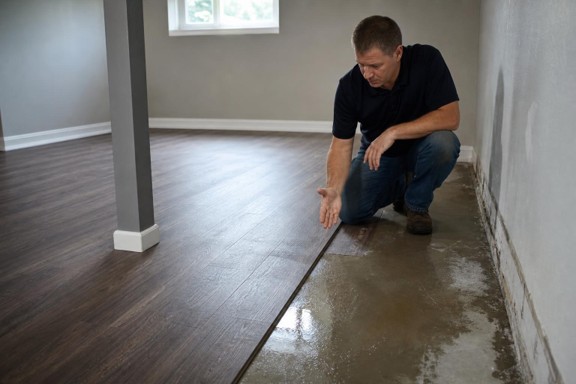
Discover if waterproof flooring is worth it for Paramus basements by understanding waterproof technology, material options, and protection benefits today.
If you own a home in Paramus, New Jersey, you've probably thought about what to do with your basement. Maybe you've already finished it once, only to watch the flooring buckle after a heavy spring rain. Or maybe you've been putting off the project entirely because you're not sure which flooring can actually survive down there. The question of whether waterproof flooring is worth it for Paramus basements comes up constantly among local homeowners, and for good reason: this area presents a specific set of challenges that most generic flooring advice doesn't address.
Between the local water table, the clay-heavy soil, and the kind of weather Bergen County throws at us, basements here take a beating that homeowners in drier regions never have to think about. The answer isn't as simple as "yes, install it," though. The right choice depends on your specific conditions, your budget, and how you actually plan to use the space. Here's what you need to know before committing to a flooring decision that could cost you thousands to redo if you get it wrong.
The Unique Challenges of Basements in Paramus, New Jersey
Paramus sits in a part of Bergen County where the geology and climate conspire against basement flooring. Understanding these local factors is the first step toward making a smart investment, because a flooring material that performs perfectly in Arizona or even in upstate New York might fail completely here.
Local Soil Composition and High Water Tables
The soil throughout much of Paramus and surrounding Bergen County towns is heavy with clay and glacial till, a legacy of the last ice age. Clay soil is particularly problematic for basements because it retains water rather than draining it away from your foundation. After a rainstorm, that water pressure builds against your basement walls and floor slab, a process called hydrostatic pressure, and it can force moisture through even tiny cracks in the concrete.
The water table in many Paramus neighborhoods sits relatively high, sometimes just a few feet below the surface. During wet seasons, that table can rise even further. Homes built in the 1950s through 1970s, which make up a significant portion of Paramus housing stock, often lack the modern waterproofing membranes and drainage systems that newer construction includes. Even homes with sump pumps can experience moisture intrusion when the system is overwhelmed or during power outages.
Seasonal Humidity and Temperature Fluctuations
Bergen County's climate brings another layer of difficulty. Summers are humid, with average relative humidity often exceeding 70%, and basements naturally run cooler than the rest of the house. That temperature differential creates condensation on surfaces, including flooring. You might not see standing water, but the moisture is there, silently warping hardwood, delaminating laminate, and feeding mold colonies under carpet padding.
Winters bring their own problems. The freeze-thaw cycle can cause concrete slabs to shift slightly, and temperature swings stress rigid flooring materials. A basement that feels bone-dry in January might show moisture readings above 80% relative humidity by June. Any flooring you install needs to handle this full range without degrading.
Defining Waterproof vs. Water-Resistant Flooring
This distinction matters more than most homeowners realize, and the flooring industry doesn't always make it easy to tell the difference. Water-resistant flooring can handle minor spills and brief exposure to moisture without immediate damage. Think of it like a rain jacket that keeps you dry in a drizzle but soaks through in a downpour. Many laminate products and some engineered hardwoods fall into this category: they have coatings or treatments that slow water absorption, but prolonged exposure will still cause swelling and damage.
Waterproof flooring, by contrast, has a core material that will not absorb water regardless of how long it sits there. The most common waterproof cores are made from stone-polymer composite (SPC), wood-polymer composite (WPC), or inorganic materials like porcelain and epoxy. If your basement floods with two inches of water and it sits for 24 hours before you can clean it up, waterproof flooring should survive intact. Water-resistant flooring almost certainly won't.
For Paramus basements specifically, water resistance isn't enough. The combination of high water tables, clay soil, and seasonal humidity means your flooring will face chronic moisture exposure, not just the occasional spill. You need materials rated as truly waterproof, with cores that won't swell, warp, or decompose when exposed to moisture over months and years.
Top Waterproof Flooring Options for Local Homeowners
Not all waterproof flooring performs equally in below-grade installations. Here are the options that make the most sense for this area, along with their trade-offs.
Luxury Vinyl Plank (LVP) and Tile (LVT)
LVP and LVT have become the go-to recommendation for basement flooring in the Northeast, and for good reason. Products with SPC cores are completely waterproof, dimensionally stable across temperature changes, and available in designs that convincingly mimic hardwood and natural stone. Installation is straightforward with click-lock systems, and most can be installed as floating floors directly over concrete with just a vapor barrier underlayment.
For Paramus basements, look for SPC vinyl with a minimum wear layer of 20 mil for living spaces or 12 mil for storage areas. Expect to pay between $3 and $7 per square foot for quality SPC products, with installation adding another $2 to $4 per square foot depending on subfloor prep. The main downside: LVP can feel somewhat hollow underfoot compared to real wood or tile, though thicker products (6mm and above) with attached cork or EVA underlayment minimize this issue significantly.
WPC-core vinyl is another option, offering a slightly warmer, softer feel underfoot. It's also waterproof, but it's slightly less dimensionally stable than SPC in extreme temperature swings. For a basement that sees wide seasonal temperature variation, SPC is generally the safer bet.
Epoxy Coatings and Porcelain Tile Solutions
Epoxy floor coatings bond directly to the concrete slab, creating a monolithic waterproof surface with zero seams for water to penetrate. A professionally applied epoxy system typically costs $6 to $12 per square foot and can last 15 to 20 years with proper maintenance. The look has evolved well beyond the industrial gray of old garage floors: metallic finishes, flake systems, and custom colors can create a polished, modern aesthetic.
The catch with epoxy is that it requires thorough concrete preparation, including grinding, crack repair, and moisture testing. If the concrete has active moisture vapor transmission above 3 pounds per 1,000 square feet over 24 hours, you'll need a moisture mitigation system applied first, adding $2 to $4 per square foot to the project.
Porcelain tile is another excellent choice for Paramus basements. With a water absorption rate below 0.5%, porcelain is essentially impervious to moisture. It handles temperature swings well, resists scratches and stains, and can last decades. The downsides are cost (typically $8 to $15 per square foot installed), the cold feel underfoot without radiant heating, and the rigid installation that can crack if the slab shifts. For homeowners planning a high-end basement finish, porcelain paired with in-floor heating creates a premium space that shrugs off moisture concerns entirely.
Long-Term Cost Analysis and Property Value
The real question isn't just "what does waterproof flooring cost?" but "what does it cost compared to replacing cheaper flooring every few years?" Here's where the math gets interesting.
A standard carpet installation in a 500-square-foot Paramus basement runs about $2,000 to $3,500. But carpet in a moisture-prone basement typically needs replacement every 3 to 5 years due to mold, mildew, and moisture damage. Over a 15-year period, you could easily spend $8,000 to $15,000 on carpet alone, not counting the cost of mold remediation if problems develop under the padding.
Compare that to a one-time SPC vinyl installation at $2,500 to $5,500 for the same space. That flooring should last 15 to 25 years with minimal maintenance. Epoxy or porcelain tile costs more upfront but can last even longer. The cost-per-year calculation almost always favors waterproof materials in below-grade applications.
There's also the property value angle. Finished basements add measurable value to Paramus homes, but only if the finish is durable and well-maintained. A basement with visibly damaged or musty flooring can actually hurt your listing. Real estate agents in Bergen County consistently report that buyers are willing to pay a premium for basements with waterproof flooring because it signals that the space was finished thoughtfully and won't require immediate reinvestment.
Maintenance and Mold Prevention Benefits
Mold is the silent threat in every Paramus basement, and your flooring choice is one of your primary defenses against it. Mold needs three things to thrive: moisture, organic material to feed on, and temperatures between 60 and 80 degrees Fahrenheit. Basements naturally provide the temperature range, and moisture is a given in this area. The only variable you can control through flooring selection is the organic material.
Carpet padding, hardwood, and standard laminate all contain organic materials that mold feeds on. Once mold establishes itself under carpet or within a laminate core, removal usually means tearing out the entire floor and treating the concrete underneath. Professional mold remediation for a basement can cost $1,500 to $5,000 or more depending on severity.
Waterproof flooring materials like SPC vinyl, porcelain, and epoxy contain no organic matter. Even if moisture reaches the subfloor, there's nothing for mold to consume. This doesn't mean you can ignore moisture management entirely: you still want proper drainage, dehumidification, and vapor barriers. But waterproof flooring eliminates one of the three conditions mold needs, dramatically reducing your risk.
Day-to-day maintenance is simpler too. SPC vinyl needs only regular sweeping and occasional damp mopping. Epoxy wipes clean with a mop and mild detergent. Porcelain tile requires periodic grout sealing but is otherwise low-maintenance. None of these materials need the deep cleaning, deodorizing, or professional treatments that basement carpet inevitably demands.
Final Verdict: Protecting Your Paramus Investment
For Paramus homeowners, waterproof flooring in the basement isn't a luxury: it's a practical necessity driven by local conditions. The combination of high water tables, clay soil, seasonal humidity swings, and aging housing stock creates an environment where traditional flooring materials simply don't hold up. The upfront cost premium for waterproof materials pays for itself within a few years through avoided replacements, reduced mold risk, and preserved property value.
If you're working with a moderate budget, SPC luxury vinyl plank offers the best balance of performance, appearance, and cost. For homeowners willing to invest more in a true living space, porcelain tile with radiant heating creates a basement that feels like any other room in the house. And for utility-focused spaces, a quality epoxy coating provides bulletproof protection at a reasonable price point.
Whatever you choose, don't skip the basics: test your concrete for moisture vapor transmission before installation, install appropriate vapor barriers, and make sure your sump pump and perimeter drainage are functioning properly. The best waterproof flooring in the world can't fix a basement with active water intrusion. But paired with proper moisture management, it transforms a damp, underused space into square footage you can actually enjoy year-round.
