


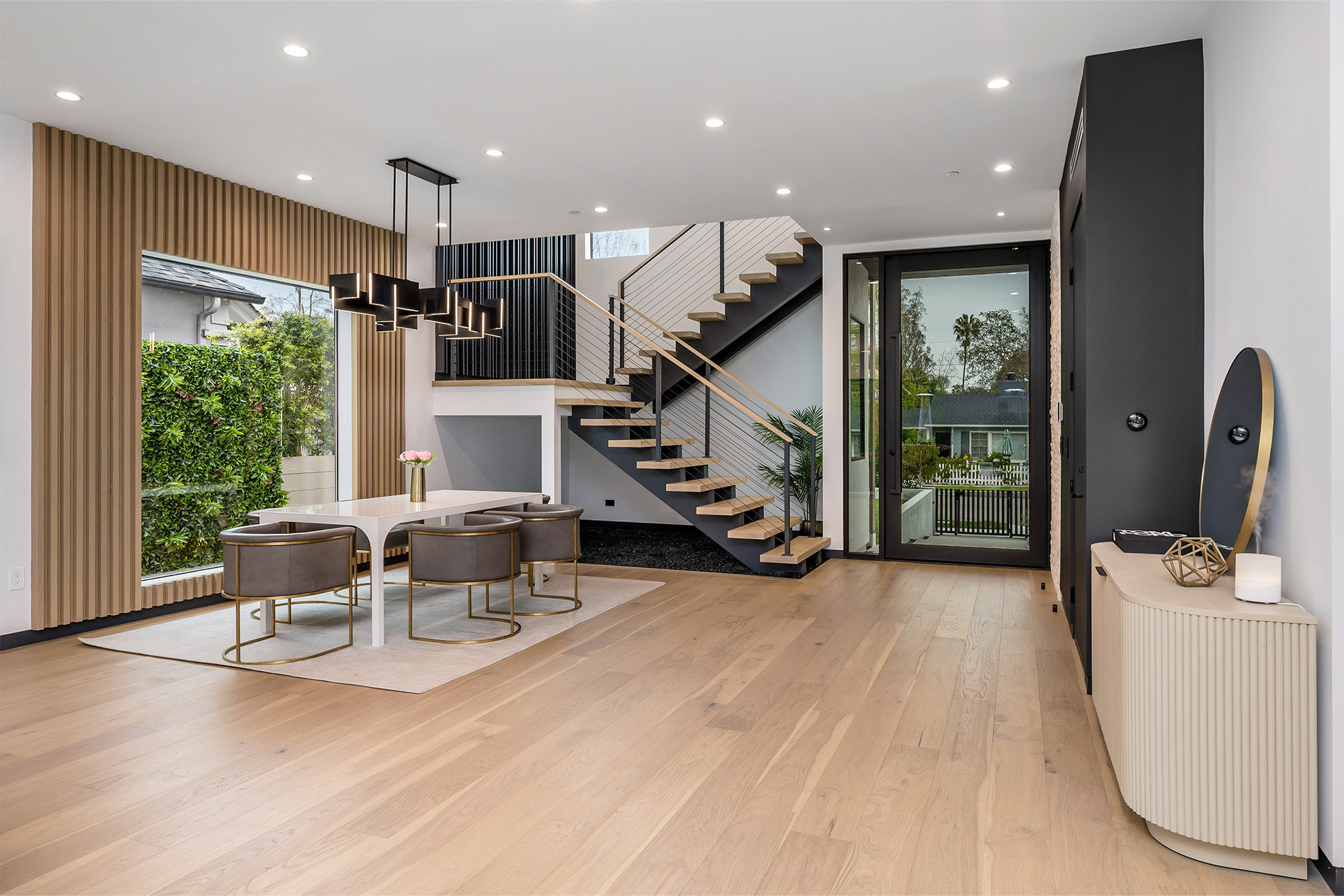
Built in shelving, decorative wall panels, window seats, and custom cabinetry can give your home a distinctive architectural character. When these features are thoughtfully coordinated with your flooring, they create a more cohesive interior that feels carefully designed rather than assembled piece by piece. Hardwood flooring offers a versatile foundation that can complement both traditional architectural details and contemporary built ins.
If you are updating your interior, explore hardwood flooring options to consider different wood tones, finishes, and visual styles. You can also browse area rugs for your home to introduce additional texture and define seating areas without concealing the character of your hardwood floors.
Coordinate Wood Tones Without Matching Everything
One of the most important design decisions is how your hardwood flooring will relate to the finish of your built in shelving. Matching every wood surface exactly is not necessary. In fact, using slightly different tones can create depth and prevent the room from appearing too uniform.
For example, natural or medium toned hardwood can complement painted shelving in white, cream, or muted gray. If your built ins feature a prominent wood grain, consider a floor finish that shares a similar undertone while allowing each element to retain its own identity.
Use Contrast to Highlight Architectural Details
Contrast can help built in features stand out. Dark shelving against lighter hardwood flooring can create a striking focal point, while lighter cabinetry above deeper flooring can give a room a grounded appearance.
Consider the room's natural light before committing to a combination. In spaces with limited daylight, very dark finishes throughout may make the interior feel heavier. A balanced mix of lighter and darker elements can help preserve visual interest without overwhelming the room.
Consider Grain Patterns and Finishes
Wood grain contributes significantly to the overall appearance of a room. Strong, noticeable grain patterns can add character, while more subtle patterns create a quieter backdrop for decorative architectural details.
If your shelving or cabinetry already has a prominent grain, a less visually busy flooring finish may create a better balance. Alternatively, simpler built ins can provide an opportunity to choose hardwood with more pronounced natural variation.
Finish also matters. Matte and low sheen surfaces can create a more understated appearance, while higher sheen finishes reflect more light. Look at flooring samples alongside your existing cabinetry and trim to see how the colors and finishes interact in your home's lighting.
Create Continuity Between Connected Spaces
Hardwood flooring can help connect rooms that feature different architectural details. Using a consistent flooring style through connected living areas, hallways, or home offices can establish visual continuity while allowing shelving and cabinetry to vary from room to room.
This approach can be particularly effective in homes where built in bookcases, fireplace surrounds, or custom storage define individual spaces. The flooring creates a common element that ties these features together.
Build a Cohesive Interior Around Your Flooring
The most successful combinations consider the entire room rather than treating the floor and built ins as separate design decisions. Wood tones, grain patterns, finishes, lighting, and surrounding materials all contribute to the finished result.
Whether you are refreshing a traditional interior in Ridgewood or updating a contemporary space in Franklin Lakes, selecting hardwood flooring that complements your architectural features can help bring your design together. Contact G. Fried Flooring & Design to discuss hardwood flooring options for your home.
