


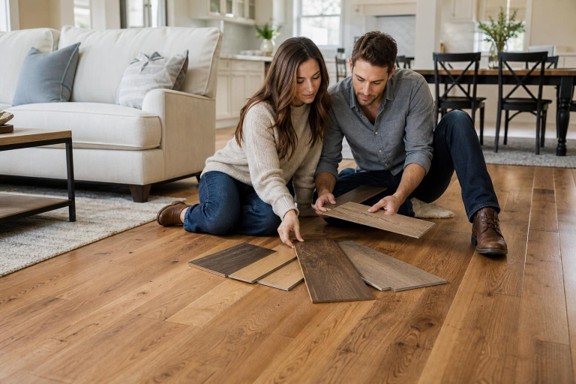
Explore solid vs. engineered wood in this complete guide for Paramus homeowners to find the best hardwood flooring types, installation tips, and care basics.
If you're a Paramus homeowner thinking about upgrading your floors, hardwood is probably near the top of your list, and for good reason. It's one of the few home improvements that genuinely pays for itself, both in daily comfort and resale value. But choosing the right type of hardwood, getting it installed correctly, and knowing how to maintain it in New Jersey's climate requires more than a quick trip to the showroom. This guide covers the practical details that matter most for homeowners in Bergen County: which wood types hold up best here, how installation actually works, and where to find quality products without overpaying. Whether you're renovating a 1960s split-level or finishing a new build, the decisions you make about your flooring will affect your home for decades. Getting those decisions right starts with understanding what you're actually buying.
Hardwood Flooring Benefits for Paramus Property Values
Paramus sits in one of the most competitive real estate markets in northern New Jersey, and flooring choices carry real weight with buyers. According to the National Association of Realtors, hardwood floors consistently rank among the top features homebuyers look for, with many willing to pay a premium for homes that already have them installed. In Bergen County specifically, where median home prices have continued climbing through 2025 and into 2026, a well-maintained hardwood floor can add measurable value to a listing.
Beyond resale numbers, hardwood offers something carpet and vinyl can't: longevity. A properly installed and maintained hardwood floor can last 75 to 100 years. That means the floor you put in today could still be in excellent shape when the next owner moves in. Carpet, by comparison, typically needs replacing every 8 to 15 years.
There's also the allergen factor, which matters in a region where seasonal allergies hit hard from March through October. Hardwood doesn't trap dust mites, pet dander, or pollen the way carpet fibers do. For families with kids or pets, that's a practical health benefit that goes well beyond aesthetics.
Choosing Between Solid and Engineered Hardwood
This is the single most important decision you'll make, and it depends heavily on where you live and what's under your floor. Solid hardwood is exactly what it sounds like: a single plank of wood, typically 3/4 inch thick, milled from one piece of timber. It can be sanded and refinished multiple times over its lifespan, which is why people love it for main living areas.
Engineered hardwood, on the other hand, is built from a real hardwood veneer bonded to multiple layers of plywood or high-density fiberboard. The layered construction makes it more dimensionally stable, meaning it expands and contracts less with changes in temperature and humidity. That stability makes engineered wood a better fit for basements, concrete subfloors, and rooms with radiant heat.
For Paramus homeowners, the choice often comes down to the specific room. Solid hardwood works beautifully in living rooms, dining rooms, and bedrooms on upper floors. Engineered hardwood is the smarter pick for finished basements and ground-level spaces where moisture is a concern.
Managing Humidity and Seasonal Changes in New Jersey
New Jersey's climate puts hardwood through a real workout. Summers bring humidity levels that regularly exceed 70%, while winter heating can drop indoor humidity below 30%. That swing causes wood to expand in summer and contract in winter, which can lead to cupping, gapping, or buckling if the floor wasn't installed with proper acclimation.
The fix is straightforward but non-negotiable: let your hardwood acclimate in your home for at least 5 to 7 days before installation. The wood needs to reach equilibrium with your indoor environment. Running a whole-house humidifier in winter (keeping indoor humidity between 35% and 55%) protects against excessive shrinkage and gapping between planks.
Engineered hardwood handles these swings better than solid wood, but it's not immune. Even engineered planks need proper acclimation and climate control. If you're installing over a concrete slab, a quality moisture barrier is essential regardless of which type you choose.
Popular Wood Species and Aesthetic Trends
The species you pick determines both the look and durability of your floor. Each wood has a Janka hardness rating, which measures its resistance to denting and wear. For high-traffic homes, this number matters a lot.
Red oak (Janka 1,290): The most popular choice in the Northeast. Its prominent grain pattern hides scratches well, and it takes stain beautifully.
White oak (Janka 1,360): Slightly harder than red oak with a more subtle grain. It's become the dominant trend in 2025 and 2026, especially in matte and natural finishes.
Hickory (Janka 1,820): Extremely hard and durable, with dramatic color variation. Great for active households with kids and dogs.
Maple (Janka 1,450): Clean, uniform appearance that works well in contemporary spaces. Less forgiving of scratches due to its tight grain.
Brazilian cherry (Janka 2,350): One of the hardest options available. Its deep reddish-brown tones darken over time with sun exposure.
Classic Oak vs. Modern Exotic Alternatives
White oak has dominated the hardwood market for the past few years, and that trend shows no sign of slowing down. The preference for wider planks (5 inches and above) with matte or wire-brushed finishes gives rooms a modern European feel that appeals to a broad range of buyers. If you're choosing with resale in mind, white oak in a natural or light finish is about as safe a bet as you can make.
Exotic species like Brazilian cherry, tigerwood, and acacia offer striking visual impact, but they come with trade-offs. They're typically 30% to 50% more expensive than domestic species, and some darken significantly with UV exposure. If you love the look, consider using exotics in lower-traffic areas like a study or formal dining room, and stick with domestic hardwoods in hallways and kitchens where durability matters most.
One trend worth watching: European white oak with a fumed or smoked finish. The process uses ammonia vapors to darken the wood naturally without stain, creating rich color depth that ages gracefully. Several Paramus retailers now stock fumed options from European mills.
Professional Installation Methods and Timeline
Most hardwood floors in Paramus homes are installed using one of three methods: nail-down, glue-down, or floating. The right method depends on your subfloor material and the type of hardwood you've chosen.
Nail-down installation is the traditional approach for solid hardwood over plywood subfloors. Each plank is fastened with a pneumatic nailer, creating a rigid connection that feels solid underfoot. This method works on upper floors and any room with a wood subfloor.
Glue-down is the standard for engineered hardwood over concrete. A urethane adhesive bonds the planks directly to the slab, which also acts as a sound dampener. It's more labor-intensive than nail-down but provides excellent stability.
Floating installation uses a click-lock system where planks connect to each other without fastening to the subfloor. It's the fastest method and works well for engineered hardwood in basements or over radiant heat systems. The downside: floating floors can feel slightly hollow underfoot compared to nailed or glued installations.
For a typical 1,000-square-foot installation in a Paramus home, expect the project to take 3 to 5 days, not including acclimation time. Budget an additional day for furniture removal and another for moving everything back in. Total timeline from delivery to completion: roughly 10 to 14 days.
Refinishing and Maintenance for Long-Term Durability
A solid hardwood floor can be refinished 4 to 6 times over its lifetime, depending on the thickness of the wear layer. Engineered hardwood with a thick veneer (3mm or more) can typically handle 1 to 2 refinishings. Knowing when to refinish is straightforward: if the finish looks dull even after cleaning, or if you can see bare wood in high-traffic paths, it's time.
Refinishing involves sanding the entire surface down to fresh wood, then applying new stain (optional) and finish coats. The process typically takes 3 to 5 days for a standard-sized room, including dry time between coats. Plan to vacate the space during the work, as traditional sanding generates significant dust and fumes.
Dustless Sanding and Low-VOC Finish Options
Dustless sanding systems have become the industry standard in Bergen County, and for good reason. These systems use vacuum attachments on the sanding equipment that capture 95% to 99% of airborne dust at the source. The result is a cleaner process that's safer for your family and easier on your HVAC system.
Low-VOC and zero-VOC finishes have also improved dramatically. Water-based polyurethanes now offer durability comparable to oil-based products without the strong chemical odor or extended dry times. A water-based finish typically dries enough for light foot traffic within 4 to 6 hours, versus 24 hours for oil-based alternatives. If anyone in your household has respiratory sensitivities, insist on water-based products.
Routine Care for High-Traffic Bergen County Homes
Daily maintenance is simple but makes a real difference over time. Use felt pads under all furniture legs, and replace them every 6 to 12 months as they compress and collect grit. Sweep or vacuum with a hard-floor attachment daily in high-traffic areas like entryways and kitchens.
For weekly cleaning, a damp (not wet) microfiber mop with a pH-neutral hardwood cleaner is all you need. Avoid steam mops entirely: the heat and moisture can damage the finish and cause warping. Keep doormats at every exterior entrance, especially during New Jersey's muddy spring months and salt-heavy winters.
Recoating (applying a fresh layer of finish without sanding down to bare wood) every 3 to 5 years extends the life of your floor significantly. It's faster and cheaper than a full refinish, typically costing $1 to $2 per square foot compared to $3 to $5 for a complete sand-and-refinish job.
Selecting the Best Hardwood Retailers in Paramus
Paramus has no shortage of flooring showrooms, which is both a blessing and a source of confusion. Route 17 and Route 4 alone have a dozen options, ranging from big-box stores to specialty hardwood dealers. The quality and service vary enormously.
Start by narrowing your search to retailers that carry hardwood from mills with NWFA (National Wood Flooring Association) certification. This ensures the product meets industry standards for moisture content, milling accuracy, and grading consistency. Ask to see the actual planks you'll receive, not just a showroom sample: color and grain variation between batches is normal, and you want to know what you're getting.
Get at least three quotes, and make sure each includes the same scope: material, underlayment, removal of existing flooring, subfloor prep, and installation labor. The cheapest quote often excludes subfloor preparation, which can add $500 to $1,500 depending on the condition of your existing floor. Ask every contractor about their warranty: reputable installers in the Paramus area typically offer 1 to 2 years on labor, while manufacturer warranties on the wood itself range from 15 years to lifetime.
Local specialty retailers often provide better guidance than national chains, especially for tricky installations involving older homes with uneven subfloors or unusual layouts. A retailer who sends someone to measure and inspect your subfloor before quoting is one worth taking seriously.
Hardwood flooring remains one of the smartest investments a Paramus homeowner can make. The key is matching the right wood species and installation method to your specific home, climate conditions, and lifestyle. Take the time to visit showrooms, ask detailed questions about acclimation and subfloor prep, and choose an installer with verifiable local references. Your floors will thank you for the next several decades.
